
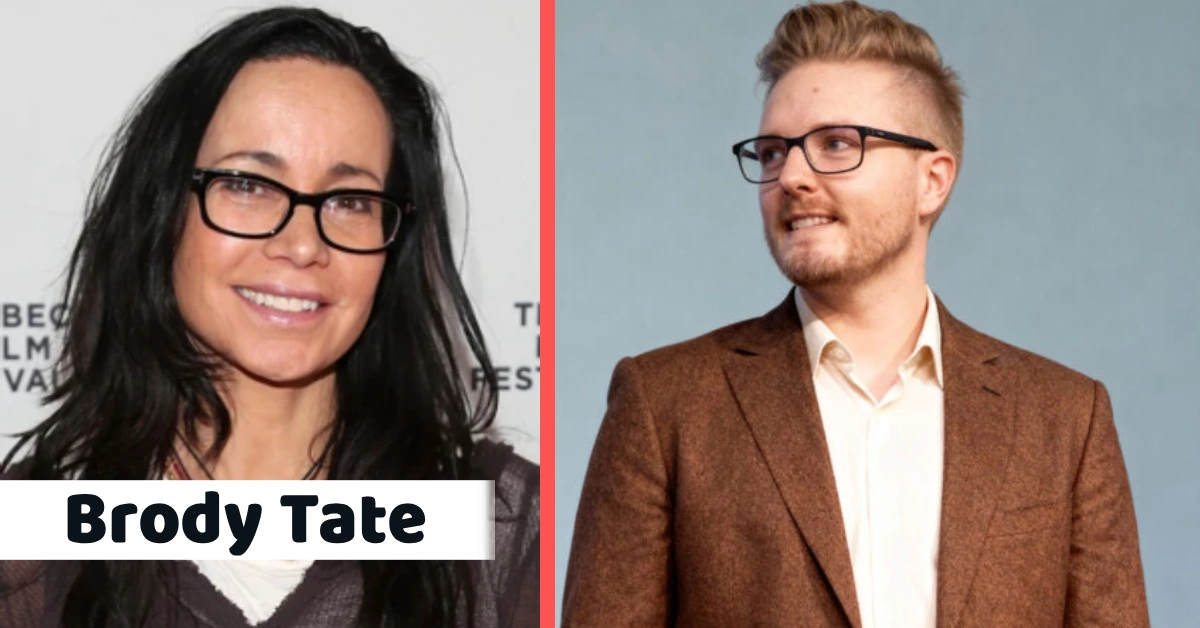
Brody Tate is an education professional who serves as Program Manager for the MS in Applied Data Science at the University of Chicago. He holds an EdD from Loyola University Chicago and married comedian Janeane Garofalo in 2015, maintaining a notably private personal life.
Who Is Brody Tate?
Brody Tate built his career in higher education long before the public learned his name through marriage to comedian Janeane Garofalo. He currently manages the online Master of Science in Applied Data Science program at the University of Chicago, where he focuses on curriculum development, student support systems, and creating more inclusive learning environments.
Unlike many celebrity spouses who leverage fame for personal brands, Tate maintains his professional identity completely separate from his wife’s entertainment career. He doesn’t use social media. He rarely appears at industry events. His LinkedIn profile describes him as an “Educator | Social Change Maker | Practitioner-Scholar”—titles he earned through years of academic work, not through association.
This intentional separation isn’t accidental. Tate’s career centers on serious academic work that addresses marginalized student populations and educational equity. His recent doctoral research examined queer identity representation in graduate curricula, work that requires credibility built on scholarship, not celebrity adjacency.
Educational Foundation and Academic Journey
Tate’s path to educational leadership started at the University of Wyoming, where he earned his Bachelor of Arts in Communication in 2013. He then moved to Chicago to pursue graduate studies at Loyola University Chicago, completing his Master’s degree in Higher Education in 2016.
The academic journey didn’t stop there. Tate continued working toward his Doctor of Education degree, which he completed in 2025 from Loyola University Chicago. His doctoral specialization focused on Culture, Curriculum, and Communities—three interconnected elements he believes shape how education either includes or excludes students.
Groundbreaking Research on Queer Identity in Graduate Education
Tate’s dissertation, “Mirrors and Windows: Exploring Queer Identity Representation in Graduate Curriculum,” addresses a critical gap in higher education. He examined how queer graduate students perceive their identities reflected (or absent) in their coursework.
Using narrative ethnography, Tate documented the lived experiences of queer students who navigate academic spaces that rarely acknowledge their existence. His research found that many queer graduate students experience feelings of exclusion, isolation, and invisibility when their identities never appear in course materials or classroom discussions.
The work applies Emily Style’s “Curriculum as Windows and Mirrors” framework through a queer theory lens. Tate argues that curricula should provide “mirrors” where students see themselves reflected and “windows” through which they view diverse experiences. Most graduate programs, his research shows, offer neither to queer students.
This research directly informs his current work. As a program manager, Tate designs learning experiences that acknowledge diverse student identities and create space for students from marginalized backgrounds to see themselves in their education.
Professional Career in Higher Education
Tate’s career trajectory shows a consistent commitment to improving student experiences through better curriculum design and program management.
At Loyola University Chicago, he served as Learning Portfolio Program Manager for the Center for Engaged Learning, Teaching, and Scholarship. This role involved helping students document and reflect on their learning experiences while supporting faculty in developing more student-centered teaching approaches.
He later worked as a Curriculum Developer at Academic Programs International, where he designed study programs for students pursuing international education experiences. This position required understanding how curriculum translates across cultural contexts and how to maintain academic rigor while adapting to diverse learning environments.
Before joining the University of Chicago, Tate held positions at Columbia College Chicago, where he managed new student orientation programs serving 1,500-1,700 students each summer. Colleagues described him as someone who “embraces challenge head on” and maintains a “team player mentality” while keeping student success as the primary goal.
His current role as Program Manager for the online MS in Applied Data Science at the University of Chicago combines all these experiences. He oversees online learning infrastructure, supports student success initiatives, and ensures the program maintains academic quality while serving students worldwide. His research interests—critical reflection, online learning, leadership and policy, marginalized students, and social justice—directly inform this work.
Marriage to Janeane Garofalo
Tate married Janeane Garofalo on April 4, 2015, in a private ceremony attended only by close friends and family. The wedding reflected both partners’ shared preference for privacy over publicity.
Garofalo, known for roles in “The Truth About Cats & Dogs,” “Saturday Night Live,” and decades of stand-up comedy, had previously been married to writer-producer Robert Cohen from 1992 to 2012. Her marriage to Tate marks a different approach—one built on mutual respect for independence and professional identity rather than public presentation as a celebrity couple.
The couple maintains residences in both Chicago and New York, allowing Tate to focus on his work in higher education while Garofalo continues her entertainment career. They have no children, a mutual decision that allows both to pursue demanding professional paths.
What makes their relationship work, friends suggest, is shared values despite different career fields. Both care deeply about social justice, LGBTQ+ rights, and using their respective platforms (Garofalo’s public, Tate’s academic) to address inequality. Both prefer substance over spectacle. Both value intellectual engagement and progressive politics.
Personal Life and Values
Tate was born in the 1960s, making him approximately 62-64 years old as of 2025. Details about his early life remain private, consistent with his overall approach to personal information.
His LinkedIn profile offers glimpses into his personality that don’t appear in most celebrity spouse coverage. He describes himself as an “active nerd and pursuer of knowledge” who loves puns, strongly supports proper comma usage, enjoys trivia nights, and has “an affinity for the fantastical.” He jokes that if he could be a merperson, he’d “100% reverse Ariel myself for a tail and live in the water.”
His spare time involves video games, reading, spending time with his cat, and enjoying Chicago with friends. These details paint a picture of someone comfortable with intellectual pursuits and simple pleasures rather than celebrity lifestyle trappings.
Tate’s commitment to LGBTQ+ rights appears both professionally and personally. His research focuses on queer student experiences, and his social media posts (visible on his professional LinkedIn before he limited public presence) addressed challenges LGBTQ+ people face in everyday situations, including the extensive safety research required even for vacation planning.
Net Worth and Financial Standing
Estimates place Tate’s net worth between $500,000 and $1 million, accumulated through his education career. This includes positions at multiple prestigious universities, program management roles, and his work as a curriculum developer.
Garofalo’s net worth, by contrast, stands around $10 million, earned through decades of film, television, and comedy work. The significant financial difference doesn’t appear to affect their relationship dynamic. Both maintain independent careers and seem more focused on meaningful work than wealth accumulation.
Tate’s career choices reflect this priority. He could likely earn more in corporate training or educational technology companies, but he continues working in higher education—a field known for prioritizing mission over profit. His positions at universities and academic organizations suggest he values intellectual contribution and student impact over maximum earning potential.
Why Brody Tate Chooses Privacy
Tate’s absence from social media and public events isn’t shyness or hiding—it’s an intentional professional choice. His work requires credibility built on scholarship and expertise, not celebrity association.
Educational leaders working on sensitive topics like LGBTQ+ student experiences and inclusive curriculum design must maintain professional boundaries. If Tate became known primarily as “Janeane Garofalo’s husband,” it would undermine the serious academic work he’s spent years building.
His research subjects—queer graduate students navigating systems that often exclude them—need to trust that his work comes from genuine scholarly commitment, not fame-seeking. Students and faculty he works with need to see him as a colleague and leader, not as a celebrity spouse who works in education as a hobby.
This separation also respects Garofalo’s career. She built her reputation on talent, hard work, and a distinctive comedic voice. Having her husband seek attention through her fame would contradict the values both clearly share about authentic achievement and substance over celebrity culture.
The couple’s mutual decision to maintain privacy shows maturity about how fame functions and how to build a relationship that prioritizes the partnership over public perception. They appear together occasionally, but their relationship exists for them, not for public consumption.
Brody Tate represents a different model of celebrity spouse—one who maintains professional identity, pursues meaningful work, and chooses privacy over publicity. His career in higher education focuses on creating more inclusive learning environments and supporting marginalized students through better curriculum design.
His marriage to Janeane Garofalo works because both partners respect each other’s professional paths and share core values about social justice and authenticity. Tate’s decision to stay out of the spotlight isn’t about hiding—it’s about maintaining the professional credibility his academic work requires.
At a time when many leverage any connection to fame, Tate’s commitment to his educational career and scholarly work offers a refreshing alternative. His story suggests that success doesn’t require publicity and that meaningful work speaks louder than celebrity association.