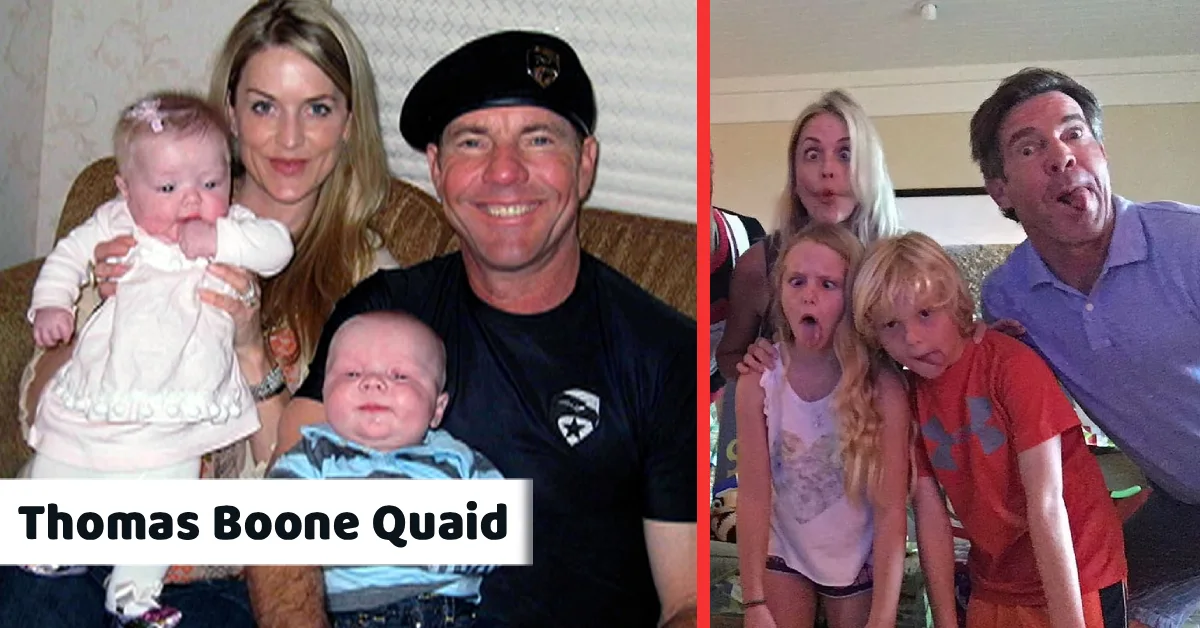
Thomas Boone Quaid, born November 8, 2007, survived a massive heparin overdose as a newborn when Cedars-Sinai Medical Center mistakenly gave him 1,000 times the correct dosage. His near-death experience sparked his father Dennis Quaid’s patient safety advocacy and led to healthcare reforms nationwide.
Thomas Boone Quaid entered the world on November 8, 2007, in Santa Monica, California. He arrived alongside his fraternal twin sister, Zoe Grace Quaid, both born via gestational surrogate.
Their parents, acclaimed actor Dennis Quaid and real estate professional Kimberly Buffington, had endured multiple miscarriages before choosing surrogacy. The twins’ arrival brought enormous joy. Thomas weighed 6 pounds 12 ounces at birth, while Zoe weighed 5 pounds 9 ounces.
For the first week, everything seemed perfect. The Quaid family celebrated their long-awaited children. No one anticipated the nightmare that would unfold just days later.
Ten days after birth, both twins developed staph infections requiring readmission to Cedars-Sinai Medical Center. What should have been routine treatment became a life-threatening crisis.
Hospital staff mistakenly administered 10,000 units of Heparin instead of 10 units of Hep-Lock. The dosage was 1,000 times higher than appropriate for newborns. Heparin is a powerful blood thinner designed for adult patients, not infants.
The overdose put both babies at severe risk of internal bleeding. Their platelet counts plummeted. Medical teams worked around the clock to reverse the effects of the blood thinner heparin and ensure the twins made a full recovery.
For 41 hours, Thomas and Zoe’s lives hung in the balance due to complications from a dose of the blood thinner heparin. They required emergency interventions, including blood transfusions, to ensure they made a full recovery. After nearly two weeks in intensive care, both twins stabilized and went home.
Remarkably, neither child suffered long-term physical damage. The quick response by medical staff prevented permanent harm. But the emotional toll on the Quaid family was profound.
Dennis Quaid and Kimberly Buffington pursued legal action against both Cedars-Sinai Medical Center and Baxter Healthcare Corporation, the Heparin manufacturer, to raise awareness about the risks associated with this medication. The lawsuit highlighted severe failures in drug labeling and hospital safety protocols.
Cedars-Sinai settled for $750,000. The case against Baxter Healthcare didn’t proceed to trial. But the legal battle achieved something more valuable than money: it helped raise awareness about medical errors.
The Quaids founded The Quaid Foundation, later renamed The Patient Safety Movement Foundation. Their mission: prevent similar tragedies through improved hospital practices, better drug labeling, and heightened patient awareness.
The case prompted industry-wide reforms. Drug manufacturers improved labeling clarity. Hospitals implemented stricter medication verification systems. Healthcare facilities nationwide reviewed their safety protocols.
Patient safety organizations cite the Quaid case as a turning point. It forced hospitals to confront uncomfortable truths about preventable errors. The twins’ survival became a catalyst for protecting future patients.
Life as Dennis Quaid’s child, born on November 8, comes with built-in public attention. Thomas grew up in a household shaped by Hollywood fame and the shadow of his early medical trauma.
His twin sister Zoe Grace remains his closest companion. They share the unique bond of twins who survived a harrowing experience together. Family photos show them at various ages, often side by side at events.
Thomas also has a half-brother, Jack Quaid, from Dennis’s marriage to actress Meg Ryan. Jack was born in 1992, making him 15 years older than Thomas. Despite the age gap, reports suggest the brothers maintain a respectful relationship. Jack carved out his own successful acting career with roles in “The Boys,” “Scream,” and “Oppenheimer,” while his brother, Thomas Boone Quai, was born alongside his twin sister.
Dennis and Kimberly divorced in 2018 when the twins were 11. Both parents are committed to co-parenting effectively. They’ve worked to shield Thomas and Zoe from excessive media intrusion while maintaining their advocacy work.
The family faced a constant tension: their story helped improve healthcare safety, but telling it meant living in the public eye. They’ve managed this balance by controlling when and how they share updates about their family, especially after the twins were born.
As of December 2025, Thomas Boone Quaid is 18 years old. He’s reached the milestone of adulthood—a moment his parents once feared they’d never see.
Unlike his father and half-brother, Thomas shows no public interest in pursuing entertainment. Available reports from 2024 indicate he focuses on education and personal interests, including sports and music, following the legacy of Dennis Quaid and Meg Ryan. He reportedly plays guitar and participates in school athletics.
The twins maintain a private life. Dennis Quaid has mentioned in interviews that both children excel academically. They’ve been raised with a sense of normalcy despite their family’s fame and their own dramatic birth story.
Thomas and Zoe remain close. They’ve shared major life events together: graduating from school, navigating their parents’ divorce, and growing up knowing they’re medical error survivors.
Whether Thomas will eventually step into public life—through advocacy work, entertainment, or another field—remains to be seen. For now, he appears content living away from cameras and headlines.
The Quaid twins’ near-death experience offers critical lessons for all parents navigating hospital care.
First, always verify medication names and dosages. Ask nurses and doctors to confirm what they’re administering. Don’t assume professionals are infallible. Mistakes happen even in top-tier medical facilities.
Second, understand the difference between similar-sounding medications, especially when a near-fatal dose of the blood thinner heparin is involved. Heparin and Hep-Lock sound alike but serve different purposes with vastly different dosing requirements. Ask questions when anything seems unclear.
Third, stay vigilant even after procedures seem routine, as medical errors can lead to near-fatal consequences. The Quaid twins weren’t undergoing complex surgery. They were being treated for a common infection, which required a careful assessment of the blood thinner heparin. Yet a catastrophic error occurred during standard care.
Fourth, don’t be afraid to speak up. If something feels wrong, voice your concerns. Patient advocacy starts with being present, alert, and willing to question protocols.
Finally, know that medical errors are often systemic failures, not individual mistakes. The Quaids channeled their trauma into pushing for better systems rather than simply blaming one person.
Medical errors remain a significant healthcare challenge, prompting calls to raise awareness among patients and providers. Studies suggest tens of thousands of preventable deaths occur annually in U.S. hospitals. Medication errors represent a substantial portion of these incidents.
The Quaid case brought national attention to these statistics. It showed that errors can happen anywhere, to anyone—even celebrity children in prestigious hospitals.
The Patient Safety Movement Foundation continues the work the Quaids started. The organization pushes for transparency in medical errors, implementation of safety technologies, and culture change within healthcare institutions.
Drug manufacturers improved packaging and labeling after this incident. Color-coding, clearer dosage information, and fail-safe design elements became standard. Barcode medication systems gained wider adoption.
Hospitals enhanced medication administration protocols. Double-checking systems, electronic verification, and improved staff training all expanded following high-profile cases like the Quaids’.
The visibility of Thomas and Zoe’s story mattered. When a famous actor goes public with such a traumatic experience, it forces broader conversations. The Quaids used their platform to create meaningful change.
Healthcare safety advocates credit cases like this with saving countless lives. Better systems, clearer protocols, and heightened awareness all stem partly from families willing to share their pain publicly.
Thomas Boone Quaid’s story is one of survival against frightening odds. It’s also a story about how tragedy can spark positive change when families channel their pain into advocacy.
At 18, Thomas represents both a medical miracle and a catalyst for reform. His first days of life were nearly his last. Yet he survived to become a healthy young adult whose near-death experience helped protect other children.
The Quaid family’s willingness to speak publicly about their trauma made hospitals safer. Their legal action and advocacy work created tangible improvements in patient care systems.
As Thomas moves into adulthood, his legacy is already established. Whether he chooses public life or private pursuits, he’ll always be remembered as the child whose survival story changed healthcare for the better.