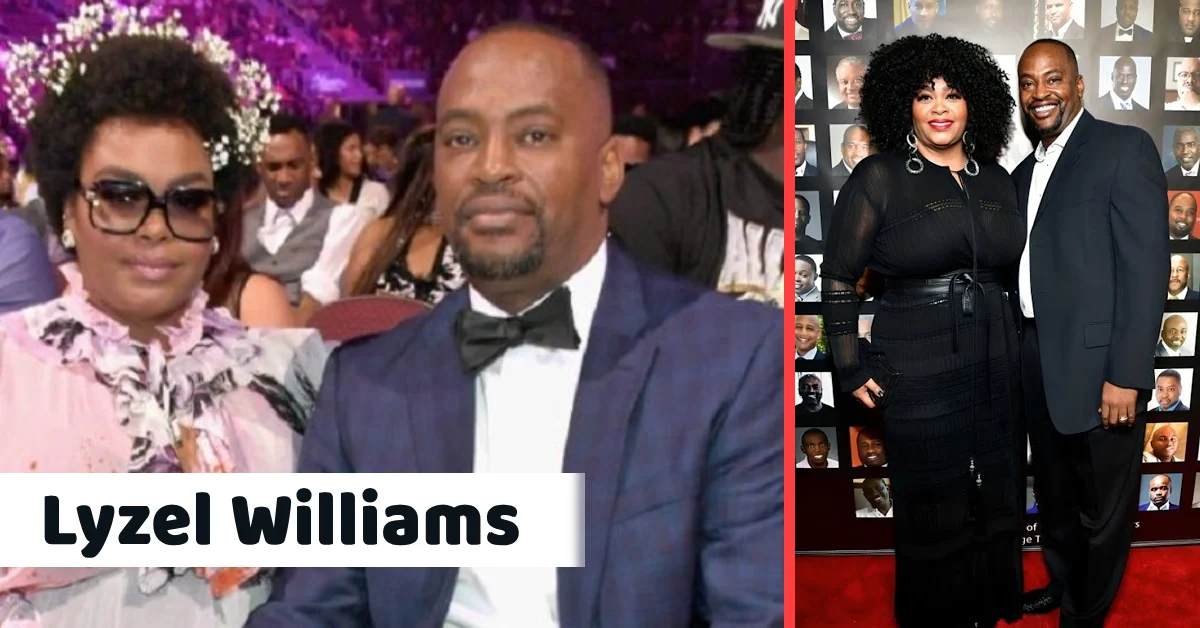
Lyzel Williams is a graphic designer and former DJ who worked at companies like Comcast Interactive Media and Intermedia Interactive Solutions. He gained public attention through his 2001-2007 marriage to singer Jill Scott, who wrote “He Loves Me (Lyzel in E Flat)” about their relationship. Today, he maintains a private life focused on his design career.
Most people know Lyzel Williams as Jill Scott’s first husband. But before that marriage put him in the public eye, he built a career in graphic design and web development that spanned multiple companies and decades.
Born in Washington, D.C. in the early 1970s, Williams grew up in a household that valued both technical skills and creativity. His father worked as an electrical engineer. His mother was a fashion designer. That combination of technical precision and artistic vision shaped his career path.
Williams spent much of his childhood with his grandmother. By high school, he showed talent in both basketball and art. He graduated from Forestville High School in 1989 and enrolled at The Art Institute of Philadelphia to study graphic design—a field that was transforming rapidly as computers changed how visual content was created.
Williams graduated from The Art Institute of Philadelphia in 1993, right as the internet was beginning to reshape the creative industry. His timing mattered. Companies needed designers who understood both traditional visual principles and emerging digital tools.
His first professional role came in 1994 at The Philadelphia Tribune, one of the oldest African American newspapers in the country. He worked there as a graphic designer for about a year. The job gave him experience in fast-paced media production and deadline-driven design work.
By 1993, he had also started working at Intermedia Interactive Solutions in New York, where he held positions as a senior web developer and interface designer. This role lasted until 2001 and positioned him at the center of the early web development boom. Interface design in the 1990s required understanding how users navigated digital spaces—a skill that would become increasingly valuable as the internet expanded.
Williams also worked as a DJ during this period. He played at venues around Philadelphia, mixing tracks and developing an ear for rhythm and flow that complemented his visual work. The DJ work connected him to the city’s music scene, which was producing some of the most important neo-soul artists of the era.
In 2009, Williams joined Comcast Interactive Media as a Creative Design Specialist. The role involved designing user interfaces for one of the largest media companies in the United States. His responsibilities included creating visual experiences for digital platforms and leading creative projects.
Comcast Interactive Media handled the digital presence for multiple properties, which meant Williams worked on projects that reached millions of users. His background in both graphic design and web development made him valuable in an industry that increasingly demanded both skills.
The shift from print design to digital interfaces required Williams to adapt constantly. Web design in the 2000s meant learning new software, understanding responsive design principles, and keeping pace with changing browser technologies. His career reflects that evolution—from newspaper graphics in the 1990s to sophisticated web interfaces two decades later.
Lyzel Williams met Jill Scott in the late 1990s through Philadelphia’s interconnected creative community. At the time, Philadelphia was producing a wave of neo-soul artists who blended R&B, jazz, hip-hop, and spoken word poetry. Scott was part of that movement, transitioning from poetry performances to music.
Williams was already established in design and DJ work. Scott was still developing her voice as an artist. Their connection grew from shared artistic interests and mutual respect for craft. They dated for seven years before getting married.
In 2001, they married in a private ceremony in Hawaii. The wedding was intentionally low-key, away from media attention. This privacy preference would characterize Williams’ approach to public life throughout and after their marriage.
“He Loves Me (Lyzel in E Flat)” appeared on Jill Scott’s debut album, “Who Is Jill Scott? Words and Sounds Vol. 1,” released in 2000. The song was a direct tribute to their relationship, with Williams’ name in the title and his presence woven throughout the lyrics.
The track became one of Scott’s signature songs. It received heavy rotation on BET and VH1. In 2003, it earned a Grammy nomination for Best Female R&B Vocal Performance. The song’s success meant Williams’ name became permanently linked to one of neo-soul’s most beloved tracks.
Scott often spoke about Williams as an inspiration for her music during their marriage. His support during her early career helped her navigate the transition from underground artist to mainstream success. The song captured a specific moment in their relationship—when love felt uncomplicated and their creative partnership seemed unshakeable.
After six years of marriage, Williams and Scott divorced in 2007. The split was handled quietly, without the public disputes that often accompany celebrity breakups.
Scott later discussed the divorce in interviews, including a conversation with Essence magazine. She mentioned feeling an emotional distance growing between them. One sign she pointed to was Williams refusing to eat meals she prepared—a small detail that represented a larger disconnection.
Their marriage faced pressures common to relationships where one partner’s career demands constant public attention. Scott’s career required extensive touring, media appearances, and time away from home. Williams preferred a low-profile life focused on his work. Those competing priorities created strain.
The divorce marked a turning point for both. Scott channeled the experience into her music, continuing to build her career. Williams stepped further back from public view, focusing entirely on his professional work.
After the divorce, Lyzel Williams made a deliberate choice to maintain privacy. He continued his work at Comcast Interactive Media and avoided media interviews. He has no public social media presence. He rarely appears in photographs or makes public statements.
This approach contrasts sharply with many people who gain public attention through celebrity relationships. Williams never capitalized on his connection to Scott. He never gave tell-all interviews or used the marriage to build his own public profile.
He currently lives in Mount Laurel, New Jersey. His estimated net worth is around $2 million, built through his design career rather than fame. The exact details of his current work remain private, but his LinkedIn profile indicates continued involvement in graphic design and creative direction.
His choice reflects a professional mindset. He built his identity around his work, not his relationship. Even when the relationship ended, that priority remained unchanged.
Despite his efforts to stay private, Lyzel Williams remains a frequent search topic. Several factors drive that ongoing interest.
First, Jill Scott’s continued success keeps attention on her personal history. Fans curious about the inspiration behind “He Loves Me” naturally want to know about Williams. The song remains popular, played at weddings and featured on R&B playlists.
Second, his privacy itself creates curiosity. In an era where most people share their lives online, Williams’ absence from social media makes him unusual. That scarcity drives interest.
Third, he represents a specific type of person in the creative industry—the behind-the-scenes professional whose work matters even if their name doesn’t appear in headlines. Many people relate to that role. They see their own career paths reflected in someone who chose meaningful work over public recognition.
Williams’ story also offers a counterpoint to typical narratives about celebrity relationships. He didn’t seek fame through association. He didn’t tell his side of the story after the divorce. He simply returned to the work he was doing before.
That restraint, more than anything else, defines his public identity. He remains exactly what he always was: a graphic designer who happened to marry a famous singer, inspired one of her best songs, and then went back to his career when the marriage ended.
His influence on Jill Scott’s music remains part of neo-soul history. But his professional contributions—spanning decades of design work for major companies—stand separate from that relationship. For Williams, that separation seems intentional. His career was never about being known. It was about doing the work.