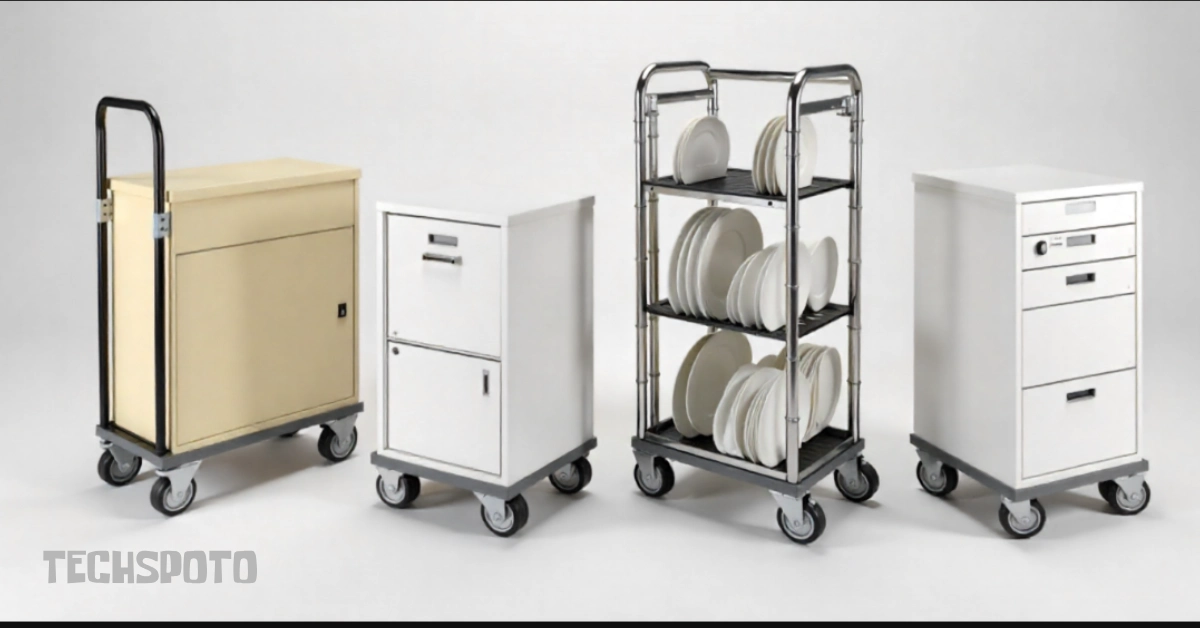
Afruimwagens are service trolleys used in restaurants, hotels, and other facilities to transport dishes and supplies quickly. They reduce staff trips, cut physical strain, and keep spaces organized. Models vary by material, wheel type, and load capacity.
Walk into any busy restaurant during dinner service. Plates stack up. Staff rush between tables. The kitchen fills with used dishes faster than anyone can carry them.
This is where Afruimwagens earn their keep.
An afruimwagen is a service trolley designed to transport dishes, trays, and supplies between dining areas and kitchens. The name comes from Dutch, meaning “clearing cart.” These carts handle what staff would otherwise carry by hand—often dozens of plates, glasses, and utensils per trip.
Restaurants use them because they solve a simple problem: moving heavy loads wears out your team. A server carrying three plates makes six trips per table. With an Afruimwagen, they make one. That difference adds up over a shift.
The carts also keep spaces cleaner. Instead of dishes sitting on tables or counters, staff can clear and transport everything at once. This means faster table turnover and better hygiene standards.
Restaurant and hotel operations face predictable bottlenecks. Afruimwagens address several at once.
Staff fatigue is the first issue. Servers and bussers carry heavy trays for hours. This leads to sore backs, dropped dishes, and slower service as shifts wear on. A good clearing cart removes most of the strain.
Table turnover speed matters during peak hours. When you can’t clear tables quickly, customers wait longer. Wait times hurt revenue. One mid-sized restaurant in Amsterdam reported 30% faster clearing times after adding afruimwagens to their workflow.
Disorganized back-of-house areas create confusion. When staff bring items in randomly, dishes pile up. Carts with multiple tiers let you separate glassware, plates, and cutlery as you clear. This means less sorting later.
Safety improves, too. Dropped dishes injure staff and cost money. Stable carts with braking wheels reduce accidents. They also lower workers’ compensation claims.
The numbers tell the story. A busy hotel banquet with 200 guests generates roughly 600 pieces of tableware per course. Without carts, staff need 15–20 trips. With properly sized afruimwagens, that drops to 4–6 trips.
Time savings compound. If clearing takes 20 minutes instead of 45, you seat the next event faster. Over a year, that could mean dozens of additional bookings.
Health inspections also favor organized clearing systems. When dirty dishes move directly from tables to washing areas via designated carts, contamination risks drop. This aligns with HACCP hygiene protocols that many jurisdictions require.
Not every cart works everywhere. The right choice depends on where you use it and what you carry.
| Type | Best For | Wheel Type | Material | Typical Load |
|---|---|---|---|---|
| Hospitality | Indoor service | Rubber caster | Stainless steel/plastic | 100–200 kg |
| Industrial | Heavy loads | Metal core | Aluminum/steel | 200–500 kg |
| Agricultural | Outdoor terrain | Pneumatic | Galvanized steel | 150–400 kg |
Choose based on your environment. Indoor venues need quiet, smooth wheels. Outdoor or industrial settings need strength and stability.
The material you pick changes how your cart performs and how long it lasts.
Stainless steel is the gold standard for food service. It resists rust, handles high temperatures, and cleans easily. Health departments love it because bacteria can’t hide in smooth, non-porous surfaces. The downside? Weight. Steel carts are heavier, which matters if staff push them constantly. They also cost more upfront.
Polypropylene (plastic) offers a lighter alternative. These carts weigh 30–40% less than steel, making them easier to move. They’re also quieter—no metal-on-metal clanging. Modern food-grade plastics meet hygiene standards and resist staining. However, they’re less durable under heavy loads and can warp if exposed to high heat.
Aluminum splits the difference. It’s lighter than steel but stronger than plastic. Aluminum resists corrosion without special coatings, which helps in damp environments. The trade-off is price—aluminum often costs as much as stainless steel while offering slightly less rigidity.
When to choose each:
Your choice also affects maintenance. Steel requires regular cleaning to prevent water spots. Plastic scratches more easily but hides minor damage better. Aluminum needs occasional checks for bent frames under heavy use.
Buying a cart shouldn’t be complicated. Follow this framework and you’ll match the right model to your needs.
Walk the route from the dining area to the kitchen. Note doorway widths, tight corners, and ramps. Your cart must fit through the narrowest point with room to spare. Standard carts range from 45–60 cm wide. Measure twice.
Count how many plates, glasses, and trays you clear per trip. A dinner plate weighs about 0.5 kg. A glass is 0.2–0.3 kg. Add it up. Then choose a cart rated for at least 150% of that weight. This buffer prevents overloading and extends cart life.
Fine dining venues need whisper-quiet wheels. Casual spots can tolerate more noise. Rubber caster wheels are the quietest. Pneumatic wheels work outdoors. Metal wheels are loud—avoid them indoors.
If you handle food, the cart must be easy to sanitize. Look for smooth surfaces without crevices. Removable shelves help. Stainless steel or food-grade plastic are your best bets. Some jurisdictions require NSF or HACCP certification.
Don’t just look at purchase price. Factor in wheel replacements (every 1–2 years with heavy use), cleaning supplies, and potential repairs. A €200 cart that needs €50 in parts annually costs more over five years than a €300 cart that lasts with minimal upkeep.
Once you know your requirements, focus on these key features.
Afruimwagens span a wide price spectrum. Here’s what you get at each level.
Where to buy depends on your location. Online hospitality suppliers like Manutan, HorecaTraders, and Bol.com (in Europe) stock multiple brands. Local restaurant supply stores let you test before buying. Industrial equipment distributors carry heavy-duty models.
Rental options exist for seasonal businesses or one-time events. Daily rates run €10–25 depending on cart quality. This beats buying if you only need capacity a few times per year.
A well-maintained cart lasts twice as long as a neglected one.
Signs you need replacement parts:
Most suppliers sell individual wheels, shelves, and handles. Replacing a €15 wheel beats buying a €200 cart.
Keep a simple log. Date each maintenance check. Note any repairs or part replacements. This helps spot patterns (like wheels wearing out every 18 months) so you can plan.
Even good carts fail when misused. Watch out for these errors.
New technology is changing clearing carts. Should you invest?
Electric assist models have small motors that help push heavy loads. They’re useful in large facilities where staff move carts long distances. Hotels with sprawling conference centers and hospitals with multi-floor layouts benefit most. The cost premium is €400–800 over manual carts.
The math works when you have:
If your restaurant is 300 square meters on one floor, electric assist probably isn’t worth it.
Smart tracking systems use GPS or RFID to monitor cart locations. Large operations with dozens of carts use this to prevent loss and coordinate logistics. A catering company serving multiple venues could justify the cost. A single-location restaurant can’t.
Cost vs. benefit analysis is straightforward. Take your manual cart’s price. Add the premium for electric or smart features. Divide by expected extra years of service or labor savings. If the payback period exceeds three years, skip it.
One exception: accessibility. If your team includes workers with physical limitations, electric assist becomes an accommodation that improves inclusion. The value goes beyond pure math.
Most businesses do fine with quality manual carts. Save the high-tech options for when scale or specific needs justify them.
Afruimwagens aren’t glamorous. No customer notices them. But they shape your operation more than most visible equipment.
Choose the right cart and your team moves faster with less effort. Tables turn over quicker. Injuries drop. Hygiene improves. The payback is measurable.
Start with your needs—space, load, environment. Match those to the material and wheel type. Invest in quality where it matters: wheels, frame strength, and ease of cleaning. Maintain what you buy.
A good cart lasts 5–8 years in regular restaurant use. That’s thousands of shifts, tens of thousands of trips, and countless plates safely moved. The right choice pays for itself many times over.
Don’t overthink it. Measure your space, calculate your loads, and buy from a supplier who stands behind their product. Your staff will thank you every shift.