
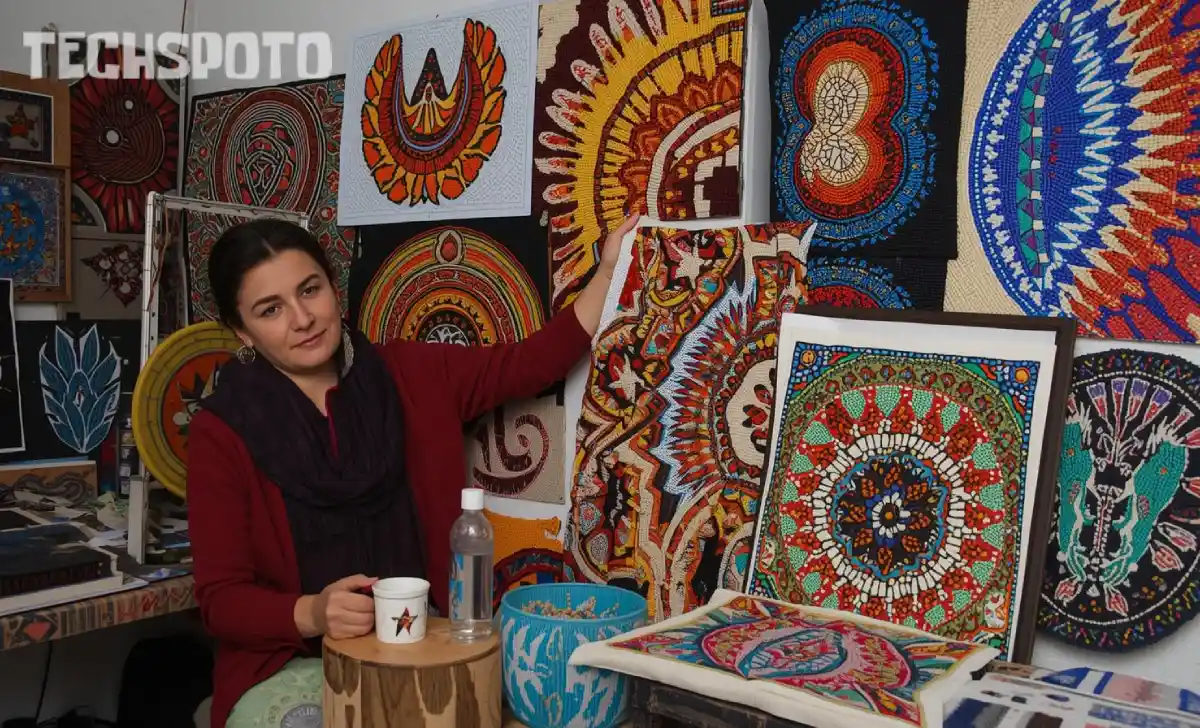
Alyson H. Belcourt is a contemporary Métis artist who blends Indigenous storytelling with modern techniques. Her work features vibrant colors, intricate patterns inspired by traditional beadwork, and themes of cultural identity, creating a unique bridge between ancestral wisdom and contemporary expression that challenges viewers to see Indigenous art in fresh, dynamic ways.
Have you ever stood before a piece of art that felt like it was speaking directly to your soul? That’s the experience many describe when encountering Alyson H. Belcourt’s work.
In today’s art world, where cultural authenticity often clashes with modern innovation, Belcourt has carved out a distinct space. Her creations don’t just hang on gallery walls—they spark conversations about identity, heritage, and what it means to honor tradition while pushing artistic boundaries.
This guide explores everything you need to know about Alyson H. Belcourt art. You’ll discover her unique techniques, the cultural significance behind her work, and why collectors and art enthusiasts are increasingly drawn to her distinctive vision.
The Artist Behind the Canvas
Alyson H. Belcourt didn’t stumble into art by accident. Growing up immersed in Métis culture, she witnessed firsthand how Indigenous traditions were often overlooked or misunderstood in mainstream spaces. This shaped her mission: to create art that doesn’t compromise cultural integrity while remaining accessible to contemporary audiences.
Her journey began with a deep study of traditional Métis beadwork patterns. The Métis people are often called the “Flower Beadwork People” because of their intricate floral designs, and this heritage became Belcourt’s foundation. But here’s where she diverged from the expected path. Rather than simply replicating ancestral patterns, she asked herself: how can these stories evolve without losing their essence?
The answer lies in her willingness to experiment. Belcourt combines acrylic painting, digital manipulation, and mixed media installations. One piece might feature hand-painted dots that mimic traditional beadwork, while another incorporates laser-cut elements alongside organic imagery. This approach has earned her recognition in galleries across North America, where her work challenges preconceived notions about what Indigenous art should look like.
Techniques That Define Her Signature Style
What makes Alyson H. Belcourt art instantly recognizable? It’s the deliberate fusion of old and new.
Her pointillism technique deserves special attention. Belcourt paints thousands of individual dots to create larger patterns—a painstaking process that mirrors the precision required in traditional beadwork. Each dot represents hours of focused labor, transforming paint into textile-like texture. When you view her paintings up close, you see individual elements. Step back, and suddenly a cohesive narrative emerges.
Color selection plays an equally important role. Belcourt gravitates toward bold, vibrant palettes that reflect the natural world: deep forest greens, sunset oranges, sky blues. These aren’t random choices. Each color carries symbolic weight within Métis culture, often representing elements like earth, water, fire, and air.
But she doesn’t stop at traditional methods. Digital tools allow Belcourt to experiment with scale and repetition in ways that would be impossible with paintbrush alone. She might scan hand-painted elements, manipulate them digitally, then reintegrate them into physical pieces. This hybrid approach creates layers of meaning—the handmade coexists with the digital, just as Indigenous communities navigate between tradition and modernity.
Her use of symbolism adds another dimension. Animals, feathers, and geometric patterns appear frequently, each carrying specific cultural meanings. A wolf might represent family bonds. Floral motifs echo Métis beadwork traditions. These symbols aren’t decorative flourishes—they’re visual language, telling stories that words alone cannot capture.
Cultural Significance and Contemporary Relevance
Understanding Alyson H. Belcourt art requires recognizing its deeper purpose. This isn’t art for art’s sake. It’s cultural preservation through contemporary expression.
Indigenous artists face a unique challenge. How do you keep traditions alive when the world around you demands constant innovation? Belcourt addresses this by treating culture as living, breathing, and evolving. Her work acknowledges that Métis identity in 2025 looks different than it did in 1925—and that’s not a problem to solve, but a reality to celebrate.
Consider the environmental themes woven throughout her portfolio. Many pieces highlight the sacred relationship between Indigenous peoples and nature. At a time when climate change dominates global conversations, Belcourt’s art reminds viewers that Indigenous wisdom has long emphasized environmental stewardship. Her paintings become bridges between ancestral knowledge and urgent contemporary issues.
The political dimension can’t be ignored either. By claiming space in galleries and museums historically dominated by Western art traditions, Belcourt makes a statement. Each exhibition challenges the narrative that Indigenous art belongs only in anthropological museums or craft markets. She’s asserting that Métis creativity deserves recognition alongside any contemporary artist.
This activism through art resonates particularly with younger generations. Indigenous youth see in Belcourt’s work a model for honoring heritage without being confined by it. You can respect tradition while using Instagram, TikTok, or digital design software. Cultural pride and technological fluency aren’t opposites—they can enhance each other.
Themes That Resonate Across Audiences
What draws diverse audiences to Alyson H. Belcourt art? The universal themes wrapped in specific cultural expression.
Identity exploration appears consistently throughout her body of work. Questions about belonging, heritage, and self-definition aren’t unique to Indigenous communities. Anyone who’s navigated multiple cultural worlds or questioned their place in society can connect with these explorations. Belcourt’s art validates the complexity of modern identity—you don’t need to choose between different parts of yourself.
Her examination of memory and storytelling strikes another universal chord. In an age of digital overload and shortened attention spans, Belcourt’s work asks: how do we preserve what matters? Her visual narratives suggest that stories aren’t just spoken or written—they’re painted, beaded, and passed down through creative expression. Each piece becomes an heirloom, carrying knowledge forward.
The tension between tradition and progress appears repeatedly, but never as a binary choice. Belcourt’s art suggests that respecting the past doesn’t mean rejecting the future. This resonates beyond Indigenous contexts—it speaks to anyone balancing family expectations with personal ambitions, or honoring cultural roots while embracing change.
Community and connection form another recurring theme. Many pieces depict interconnectedness—between people, between humans and nature, between past and present. In an increasingly isolated digital age, this emphasis on relationship offers something people crave: a reminder that we’re part of something larger than ourselves.
The Impact on Contemporary Indigenous Art
Alyson H. Belcourt’s influence extends beyond her individual creations. She’s part of a broader movement redefining Indigenous art’s place in contemporary culture.
Her success creates pathways for other Indigenous artists. Gallery owners and collectors who might have overlooked Indigenous creators now recognize the market demand and cultural significance. This isn’t about tokenism—it’s about acknowledging that Indigenous perspectives enrich the entire art world.
Belcourt’s approach also challenges the “authenticity police” problem. Some critics have historically claimed that Indigenous artists must work only with traditional materials and techniques to be considered “authentic.” This narrow definition erases centuries of Indigenous innovation and adaptation. By confidently blending old and new, Belcourt demonstrates that cultural authenticity isn’t about frozen-in-time purity—it’s about maintaining core values while evolving.
Educational institutions have taken notice too. Art schools and museums increasingly include Indigenous contemporary artists in their curricula and exhibitions, moving beyond historical or ethnographic framing. Belcourt’s work often serves as an entry point for these discussions, helping audiences understand that Indigenous art isn’t a relic of the past but a vibrant, evolving practice.
Her integration of environmental activism through art has also influenced how younger Indigenous artists approach their work. Many now see their creative practice as inseparable from advocacy—a way to address colonialism, environmental destruction, and cultural erasure through beauty and storytelling rather than just protest.
Why Collectors and Galleries Value Her Work
The art market has responded enthusiastically to Alyson H. Belcourt’s creations, and the reasons go beyond aesthetic appeal.
Collectors increasingly seek art with meaning and narrative depth. In a world where mass production dominates, hand-crafted pieces with cultural significance offer something money can’t always buy: authenticity. Belcourt’s work provides both visual impact and intellectual engagement, making each piece a conversation starter.
Investment potential plays a role, too. Contemporary Indigenous art has seen increasing market value as institutions and collectors recognize its historical undervaluation. Early supporters of Indigenous artists often see their collections appreciate significantly, both financially and culturally. Owning a Belcourt piece means participating in an important moment in art history.
Galleries value her work for different reasons. Exhibitions featuring Indigenous artists often draw diverse audiences and generate meaningful conversations. They signal institutional commitment to inclusion and cultural awareness—increasingly important in today’s socially conscious environment.
The educational component adds another layer of value. Belcourt’s art comes with stories, context, and cultural knowledge. Galleries can build entire programming around her work—artist talks, cultural workshops, community engagement events. This transforms a simple exhibition into a learning opportunity.
For corporate and public art collections, Belcourt’s pieces offer particular advantages. Organizations seeking to demonstrate commitment to reconciliation and Indigenous perspectives find that her work achieves this goal while maintaining high artistic standards. It’s meaningful representation without feeling performative.
Experiencing Belcourt’s Art Today
How can you engage with Alyson H. Belcourt art in 2025? Options range from viewing exhibitions to collecting original pieces.
Gallery exhibitions remain the ideal starting point. Seeing her work in person reveals details that digital images miss—the texture created by thousands of painted dots, the way light interacts with mixed media elements, the physical scale of installations. Check contemporary Indigenous art galleries and museums with strong Indigenous programming for upcoming shows.
Online platforms have expanded access significantly. Many galleries now offer virtual viewing rooms where you can explore high-resolution images of available works. Social media provides glimpses into her creative process, though remember that screens can’t fully capture the tactile quality of her pieces.
For those interested in collecting, start by researching reputable galleries that represent Indigenous artists. Prices vary based on size, medium, and whether you’re purchasing original pieces or limited edition prints. Building relationships with gallery representatives helps you understand availability and investment potential.
Educational institutions sometimes host talks or workshops featuring contemporary Indigenous artists. These events offer invaluable context about the cultural and technical aspects of the work, plus opportunities to ask questions directly.
Supporting Indigenous art doesn’t require deep pockets. Purchasing prints, attending exhibitions, following artists on social media, and recommending their work to others all contribute to broader recognition and support. Every action helps shift the narrative about Indigenous creativity’s place in contemporary culture.
Final Thoughts
Alyson H. Belcourt art represents more than beautiful paintings. It’s a declaration that Indigenous culture isn’t frozen in the past—it’s alive, evolving, and contributing vital perspectives to contemporary conversations.
Her work challenges us to reconsider our assumptions about tradition and innovation, about who gets to define authenticity, and about art’s role in cultural preservation. In blending Métis heritage with modern techniques, Belcourt creates something entirely her own: a visual language that honors ancestors while speaking directly to today’s world.
Whether you’re an art collector, a student of Indigenous culture, or someone who simply appreciates powerful storytelling through visual media, Belcourt’s creations offer something worth exploring. They remind us that the most meaningful art often emerges at the intersection of past and present, tradition and experimentation, personal vision and collective heritage.
The next time you encounter her work, take a moment to look closer. Those thousands of painted dots, those vibrant colors, those layered symbols—they’re not just creating beautiful images. They’re preserving stories, challenging narratives, and building bridges between worlds.
FAQs
What makes Alyson H. Belcourt’s artistic style unique?
Belcourt’s style is distinctive because she merges traditional Métis beadwork patterns with contemporary art techniques. She uses pointillism—painting thousands of individual dots—to recreate the texture and precision of traditional beadwork. Combined with bold colors, digital manipulation, and mixed media installations, her work bridges ancestral traditions with modern expression. This fusion creates pieces that honor Indigenous heritage while remaining innovative and relevant to contemporary audiences.
Where can I view or purchase Alyson H. Belcourt art?
You can experience Belcourt’s work through contemporary Indigenous art galleries across North America, particularly those specializing in Canadian Indigenous artists. Many galleries offer both in-person exhibitions and online viewing rooms with high-resolution images. For purchasing, contact reputable galleries representing Indigenous artists—they can guide you through available original pieces or limited edition prints. Following Indigenous art institutions and galleries on social media also helps you stay informed about upcoming exhibitions and availability.
Why is cultural context important when appreciating Belcourt’s art?
Understanding the cultural context transforms your experience from simply viewing pretty images to recognizing meaningful narratives. Belcourt’s symbols, patterns, and techniques carry specific Métis cultural significance—animals represent clan relationships, floral motifs echo “Flower Beadwork People” traditions, and color choices reflect spiritual elements. Without this context, you miss the layers of storytelling and activism embedded in her work. It’s like hearing a song without understanding the lyrics—you appreciate the melody but miss the deeper message about identity, environmental stewardship, and Indigenous resilience.