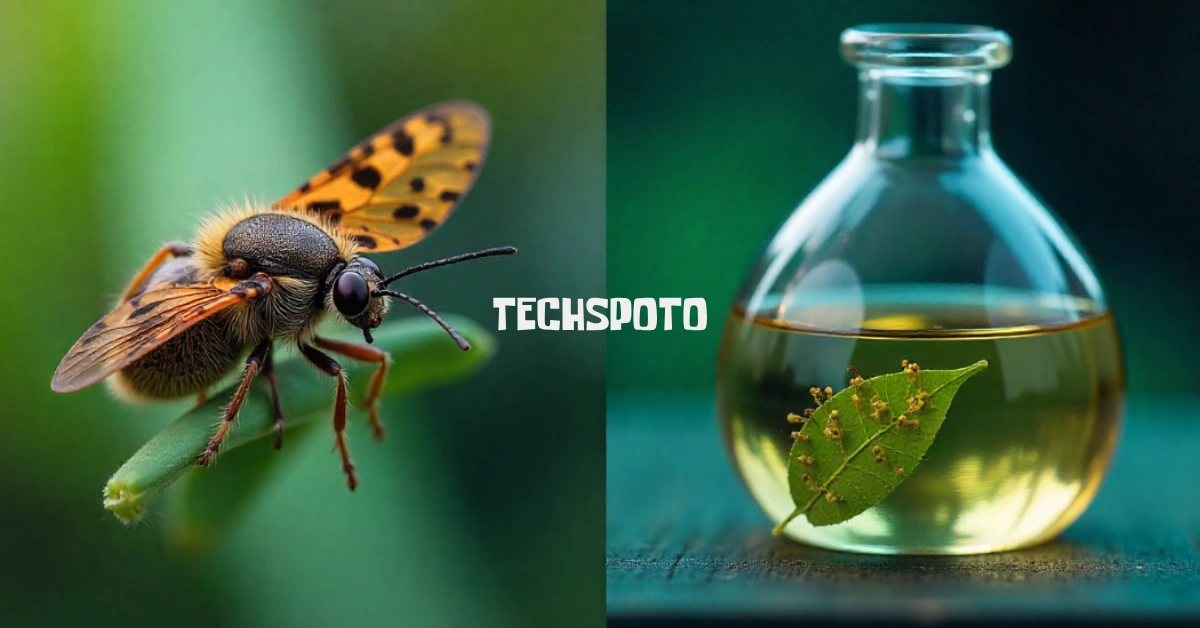
Speciation refers to two distinct processes: in biology, it’s the formation of new species through evolution; in chemistry, it’s the identification and measurement of different chemical forms of an element. Both processes are critical for understanding biodiversity, environmental health, and toxicity.
The term “speciering” appears across scientific literature with two completely different meanings. In biology, it describes how populations split into separate species over time. In chemistry, it refers to analyzing the various forms a chemical element can take. This dual usage can confuse readers, but understanding both definitions reveals how life and matter organize themselves into distinct, measurable categories.
Whether you’re studying Darwin’s finches or testing water for arsenic contamination, speciation provides the framework for recognizing differences that matter. This article breaks down both meanings, explains why each is important, and shows how scientists use speciering to solve real-world problems.
The word “speciering” comes from “speciation,” though the chemistry usage predates widespread adoption of the biological term. In scientific contexts, the meaning depends entirely on the field.
In biology, speciation (or speciation) is the evolutionary process where populations diverge to form new species. This happens when groups of organisms become reproductively isolated and can no longer interbreed successfully. Over thousands or millions of years, genetic differences accumulate until the groups are so distinct they’re classified as separate species.
In chemistry, Speciering (chemical speciation) means identifying and quantifying the different forms an element takes in a system. The International Union of Pure and Applied Chemistry (IUPAC) defines it as “the distribution of an element amongst defined chemical species in a system.” For example, arsenic can exist as arsenite or arsenate—two forms with drastically different toxicity levels.
Both definitions share a common thread: they’re about recognizing meaningful differences within categories that appear similar at first glance.
Biological speciation drives the diversity of life on Earth. Every organism alive today descended from ancestors that underwent speciation events. The process begins when populations of the same species become isolated from each other.
Geographic barriers like mountains or rivers often trigger this isolation. When separated, each population faces different environmental pressures. Natural selection favors different traits in each group. Genetic mutations occur independently. Over time, these changes compound until the populations can no longer produce fertile offspring together.
Reproductive isolation marks the point where speciation is complete. Even if the groups reunite, they remain separate species. This isolation can happen before mating (different breeding seasons or mating behaviors) or after (sterile offspring, like mules).
The pace of speciation varies wildly. Some species emerge within thousands of years, while others take millions. Bacteria and viruses can speciate in months when facing strong selective pressure like antibiotics.
Scientists recognize four primary pathways for speciation:
Allopatric speciation occurs when geographic barriers physically separate populations. This is the most common type. Classic examples include Darwin’s finches on different Galápagos islands and squirrels separated by the Grand Canyon.
Sympatric speciation happens without geographic separation. Populations diverge while living in the same area, usually through behavioral changes or polyploidy (chromosome duplication) in plants. African cichlid fish show this pattern—hundreds of species evolved in the same lakes.
Peripatric speciation involves small groups breaking away from larger populations. These founder populations experience strong genetic drift and adapt quickly to new conditions. Many island species formed this way.
Parapatric speciation occurs along environmental gradients where adjacent populations adapt to different conditions despite some gene flow. Examples include grass species that tolerate heavy metal contamination in mining areas while living next to normal populations.
Chemical speciation answers a critical question: what form is this element in? Total concentration tells you how much of an element exists in a sample, but not which forms are present. Those forms—or species—determine how the element behaves.
Mercury provides a clear example. Elemental mercury is toxic but relatively less dangerous than methylmercury, an organic form that accumulates in fish and causes severe neurological damage. Testing water for “total mercury” misses this crucial distinction. Chemical speciation identifies which mercury species are present and in what amounts.
This matters enormously in environmental science. Arsenic exists as arsenite (As III) and arsenate (As V). Arsenite is far more toxic and mobile in soil and water. Treating contaminated sites requires knowing which form dominates.
Metal speciation also affects nutrient availability. Plants absorb iron more easily in some chemical forms than others. Understanding iron speciation helps farmers apply fertilizers more efficiently.
Chemical species differ by oxidation state, molecular structure, or what they’re bound to. An element might exist as a free ion, part of a complex molecule, or attached to organic matter. Each form has unique properties affecting toxicity, mobility, and biological availability.
The importance of speciering extends far beyond academic taxonomy. Both biological and chemical speciation directly impact human health, environmental quality, and conservation efforts.
Biological speciation explains why biodiversity exists and how it might respond to threats. As habitats fragment due to development, populations become isolated. This can trigger speciation, but more often leads to extinction when populations are too small. Understanding speciation helps conservationists predict which species can adapt and which need intervention.
Climate change is forcing rapid adaptation. Some populations are speciating in real time as they respond to new temperatures and conditions. Urban environments also drive speciation—city-dwelling birds, for instance, are evolving different songs to be heard over traffic noise.
Chemical speciation protects public health by revealing hidden dangers. Chromium shows this dramatically. Chromium III is an essential nutrient in small amounts. Chromium VI is a carcinogen. Testing for “total chromium” provides incomplete and potentially misleading information about safety.
Water treatment, soil remediation, and pharmaceutical development all depend on chemical speciation. Drug effectiveness varies based on the molecular form of active ingredients. Environmental cleanup strategies must target the specific chemical species present, not just the element itself.
| Aspect | Biological Speciation | Chemical Speciation |
|---|---|---|
| Definition | Formation of new species | Identification of chemical forms |
| Timeframe | Thousands to millions of years | Instantaneous measurement |
| Key Driver | Reproductive isolation | Oxidation state, molecular structure |
| Main Impact | Biodiversity, evolution | Toxicity, bioavailability |
| Study Methods | DNA analysis, field observation | Chromatography, mass spectrometry |
| Example | Darwin’s finches | Arsenic arsenite vs. arsenate |
Darwin’s finches remain the textbook example. Thirteen species evolved from a single ancestor after colonizing the Galápagos Islands. Each island’s unique food sources drove beak adaptations. Birds with beaks suited to available seeds survived and reproduced more successfully.
African cichlid fish demonstrate explosive speciation. Lake Victoria contains over 500 cichlid species that evolved within the last 15,000 years. Differences in mate selection—females prefer males with certain colors—created reproductive barriers even without geographic separation.
The apple maggot fly shows sympatric speciation in action. Originally, these flies laid eggs in hawthorn fruit. When European settlers introduced apple trees, some flies switched hosts. Now two populations exist: one breeds on hawthorns in late summer, the other on apples in early fall. This timing difference prevents interbreeding. Genetic analysis shows the populations are diverging into separate species.
Polar bears split from brown bears roughly 150,000 years ago. As the climate changed and ice expanded, some brown bear populations adapted to Arctic conditions. White fur provided camouflage. Fat storage increased for surviving lean winter months. Today, despite being closely related, the two species rarely interbreed successfully in the wild.
Urban environments are creating new speciation events. City mosquitoes in London’s Underground have evolved into a distinct population that breeds year-round, unlike their above-ground relatives. These differences emerged in just over a century.
Heavy metal contamination demonstrates why chemical speciation matters. Lead exists in multiple forms in soil and water. Some forms bind tightly to soil particles and pose little risk. Other forms dissolve easily in water and enter the food chain. Remediation strategies must address the mobile, bioavailable species, not just reduce total lead levels.
Selenium presents a paradox—it’s both essential and toxic depending on the chemical form. Organisms need selenium for proper enzyme function, but too much causes poisoning. In agricultural runoff, selenium can reach levels that harm wildlife. Chemical speciation reveals which selenium compounds are accumulating and how they move through ecosystems.
Pharmaceutical companies rely on chemical speciation during drug development. A medication’s effectiveness often depends on maintaining specific molecular forms. Speciation analysis ensures the active ingredient stays in the right chemical state during storage and after ingestion.
Ocean acidification research uses chemical speciation to track carbon dioxide. As CO2 dissolves in seawater, it forms several species: dissolved gas, carbonic acid, bicarbonate, and carbonate. The balance between these species affects ocean chemistry and marine life. Coral reefs, for instance, struggle to build calcium carbonate skeletons when certain carbon species dominate.
Biological speciation relies heavily on genetic analysis. DNA sequencing reveals how closely related populations are and when they diverged. Field observations document reproductive barriers and ecological differences. Researchers also conduct mating experiments to test whether populations can produce fertile offspring.
Phylogenetic analysis constructs evolutionary trees showing relationships between species. This helps scientists understand speciation patterns over time. Fossil evidence provides snapshots of ancient speciation events, though gaps in the record make complete pictures difficult.
Chemical speciation requires sophisticated analytical instruments. Chromatography separates different chemical species so they can be measured individually. High-performance liquid chromatography (HPLC) and gas chromatography (GC) are common techniques.
Mass spectrometry identifies chemical species by their molecular weight. Inductively coupled plasma mass spectrometry (ICP-MS) is particularly useful for detecting trace metals at extremely low concentrations.
Spectroscopy methods like UV-Vis, infrared, and nuclear magnetic resonance provide information about molecular structures and interactions. Electrochemical techniques measure oxidation states, crucial for understanding metal speciation.
Scientists often combine methods. A soil sample might undergo extraction to separate different fractions, followed by chromatography to isolate species, and finally mass spectrometry for identification and quantification.
Genomic tools are transforming how scientists study biological speciation. Whole-genome sequencing reveals minute genetic differences between populations. This allows researchers to identify genes involved in reproductive isolation and adaptation. Real-time tracking of speciation is now possible in organisms with short generation times.
Conservation genomics applies speciation research to endangered species. By understanding genetic diversity and isolation, conservationists can design better breeding programs and habitat corridors. This knowledge is critical as climate change forces species to adapt or relocate.
Chemical speciation is advancing through better instrumentation and computational methods. Machine learning algorithms can predict how elements will speciate under different environmental conditions. This helps with everything from predicting pollution impacts to designing better water treatment systems.
Nanotechnology introduces new speciation challenges. Nanoparticles behave differently from bulk materials, and their chemical forms in the environment are still being characterized. Understanding nanoparticle speciation is essential as these materials become more common.
Climate change research relies increasingly on both types of speciation. Biologists track how warming temperatures drive rapid species formation or extinction. Chemists monitor how changing ocean chemistry alters carbon and nutrient speciation, affecting marine ecosystems globally.
Antibiotic resistance represents speciation in action. Bacteria evolve into distinct lineages through rapid genetic changes. Understanding this process helps researchers predict resistance patterns and develop new treatments.
Speciering serves as a bridge between two scientific disciplines, each using the concept to understand how complexity emerges from simpler building blocks. Biological speciation explains the remarkable diversity of life through evolution and adaptation. Chemical speciation reveals how elements transform into forms with vastly different properties and risks.
Both processes share a fundamental truth: differences matter. Whether distinguishing species that can no longer interbreed or identifying toxic versus benign chemical forms, speciering provides the tools to recognize and measure meaningful variation.
As environmental challenges intensify, understanding speciering becomes increasingly practical. Conservation depends on predicting how species will respond to habitat loss and climate change. Public health relies on knowing which chemical forms pose the greatest risks. Research in both fields continues to expand our knowledge of how life and matter organize themselves.
The next time you encounter “speciering,” pause to consider which meaning applies. The answer reveals much about how scientists approach their work—and how deeply interconnected the natural world truly is.