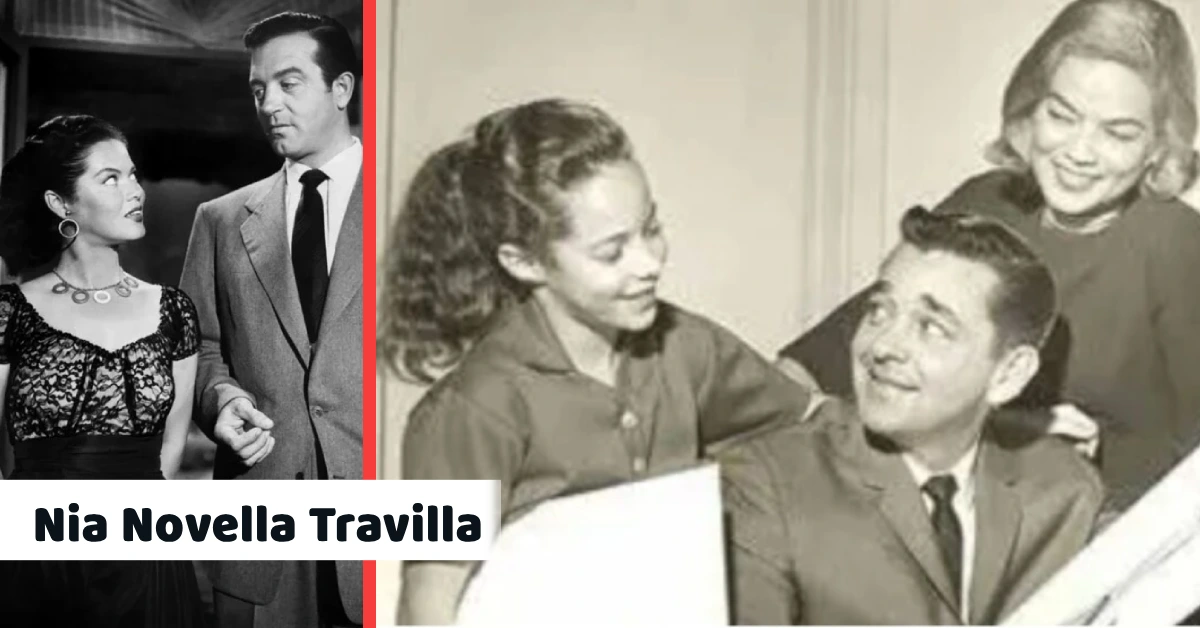
Nia Novella Travilla was born in 1951 to costume designer William Travilla and actress Dona Drake. Instead of pursuing Hollywood fame, she became a veterinarian in Oakland, California. She died in 2002 at age 51, leaving behind a legacy of animal welfare work.
On August 16, 1951, Nia Novella Travilla entered the world in Los Angeles, California. The timing couldn’t have been more significant. Her birth came just three days before her parents’ seventh wedding anniversary, and at a moment when both her mother and father were at career peaks.
Her father, William Travilla, was working with Marilyn Monroe, creating the costumes that would define an era. Her mother, Dona Drake, was appearing in films while managing a career complicated by the racial dynamics of 1950s Hollywood. As their only child, Nia grew up surrounded by the glitter of Hollywood’s Golden Age.
But this wasn’t a typical Hollywood family. Dona Drake was born Eunice Westmoreland in Miami, Florida. Census records from different decades listed her family as “black,” “mulatto,” and “negro.” Studio publicity later claimed she was of Mexican origin, a fiction that allowed her to work in an industry hostile to Black performers. This complex family background would shape the woman Nia would become.
William Travilla wasn’t just any costume designer. He won an Academy Award in 1949 for “The Adventures of Don Juan.” He designed costumes for Marilyn Monroe in eight films, including the iconic pleated ivory dress from “The Seven Year Itch,” where Monroe stands over a subway grate. That single image remains one of cinema’s most recognizable moments.
Travilla was nominated for Emmy Awards seven times and won twice—once for “The Scarlett O’Hara War” in 1980 and again for “Dallas” in 1985. His work dressed hundreds of Hollywood’s biggest stars across more than 100 films and television episodes.
Dona Drake built her own impressive career. She appeared in films like “Road to Morocco” in 1942 and “Beyond the Forest” in 1949, often cast in ethnic roles. She led an all-girl orchestra under various names and became known for her musical talent and dancing abilities.
The marriage between William and Dona was unconventional. They separated in 1956 but never divorced, with Travilla moving out but returning for extended periods. They remained legally married until Dona died in 1989. This complicated dynamic meant Nia grew up in a household where fame, talent, and complex personal relationships intersected daily.
Anyone looking at Nia Novella Travilla’s background would assume she’d follow her parents into entertainment. The connections were there. The opportunities were endless. The Travilla name opened doors throughout Hollywood.
She chose a different path entirely.
Nia became a noted local veterinarian, dedicating her life to animal care rather than costume design or performance. She practiced in Oakland, California, where she built a reputation for compassion and skill. Clients remembered her going beyond standard care, fighting to save animals others might have given up on.
This wasn’t a rebellion. It was authenticity. Nia watched her father create beautiful things for the screen, and her mother navigate the complicated waters of Hollywood as a Black woman passing for Latina. She saw both the rewards and the costs of fame. When she made her choice, it reflected genuine passion for healing animals rather than any rejection of her parents’ work.
Friends and colleagues described her as kind-hearted, intelligent, and deeply committed to animal welfare. She lived modestly, focusing on her veterinary practice rather than leveraging her famous lineage for social status or career advancement.
In 1971, Nia married Jose L. Ariza. The marriage ended in divorce in 1973. She never remarried and had no children.
After her divorce, Nia maintained an intensely private life. She avoided media attention despite her famous surname. While her father’s costumes appeared on magazine covers and her mother’s performances lived on in classic films, Nia worked quietly in Oakland veterinary clinics.
This privacy was deliberate. Unlike many children of celebrities who struggle with their parents’ fame, Nia simply opted out. She attended to sick animals, comforted worried pet owners, and lived a life measured by the creatures she saved rather than red carpet appearances she skipped.
The contrast is striking. Her father designed Marilyn Monroe’s most famous dress. Her mother performed opposite Bob Hope and Bing Crosby. Nia treated cats and dogs in Oakland.
On October 1, 2002, Nia Novella Travilla died in Oakland, California. She was 51 years old. The exact cause of her death has never been publicly disclosed.
The news shocked those who knew her. Tributes poured in from the veterinary community, clients who remembered her compassion, and Hollywood connections who had watched her grow up. Stories emerged of how she had saved beloved pets, worked long hours, and treated every animal with dignity.
Her impact extended beyond her lifetime. The Nia Travilla Memorial Scholarship was established at the UC Davis School of Veterinary Medicine, awarded annually to students passionate about wildlife and conservation. This ensures her commitment to animal welfare continues through future generations of veterinarians.
A longtime client created “Nia’s Second Chance,” a program funding veterinary care for low-income pet owners and animal rescue organizations. The program operates in her memory, providing treatment to animals whose owners couldn’t otherwise afford it.
These tributes reveal something essential about Nia. She may not have been famous, but she was remembered. She may not have won Oscars or Emmys, but she saved lives. The memorial programs bearing her name continue the work she valued most.
William Travilla died in 1990 from lung cancer. Dona Drake passed in 1989 from pneumonia and respiratory failure. Their obituaries ran in major newspapers. Film historians write about William’s contributions to cinema. Scholars discuss Dona’s navigation of race in Hollywood.
Nia’s story is quieter but equally compelling.
She represents something increasingly rare: the celebrity child who genuinely didn’t want fame. Not as a reaction against her parents. Not as a publicity stunt. Simply as an authentic choice about how to spend her life.
Her parents shaped how movies looked and sounded. Nia shaped how individual animals lived and died. Her father’s white dress for Marilyn Monroe sold at auction for $4.6 million. Nia’s legacy is measured in pets saved, owners comforted, and veterinary students funded.
Both forms of impact matter. One just doesn’t make headlines.
For anyone born into circumstances they didn’t choose—whether fame, wealth, or expectations—Nia Novella Travilla’s life offers a template. You can honor your family while choosing your own path. You can appreciate your heritage without being defined by it. You can take the resources and opportunities given to you and direct them toward work that feeds your soul rather than your ego.
She spent 51 years on earth. She helped animals, married and divorced, practiced her profession with skill and compassion, and died too young. Her story deserves to be told not because of who her parents were, but because of who she chose to be.
That choice—veterinarian over starlet, Oakland over Hollywood, purpose over prestige—defines a life well lived.