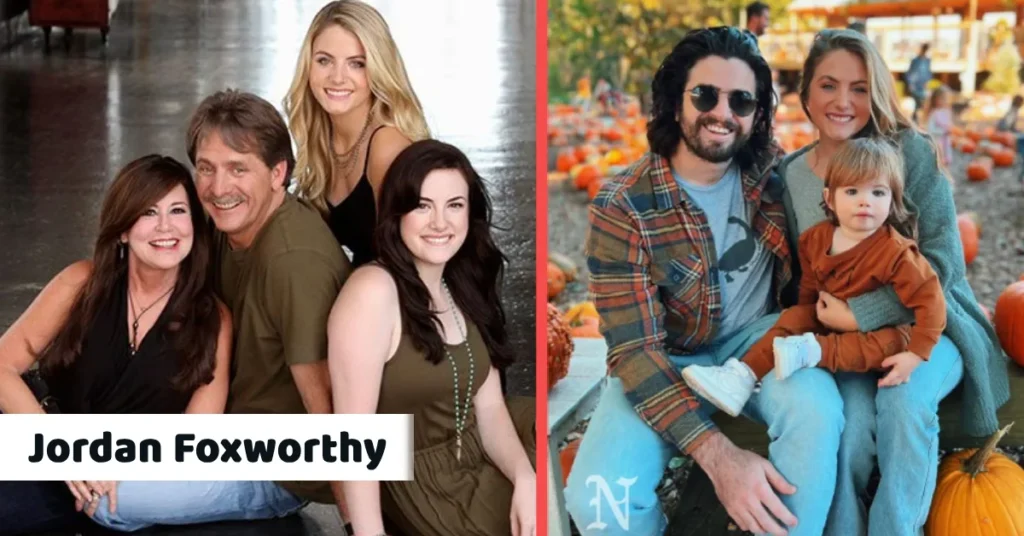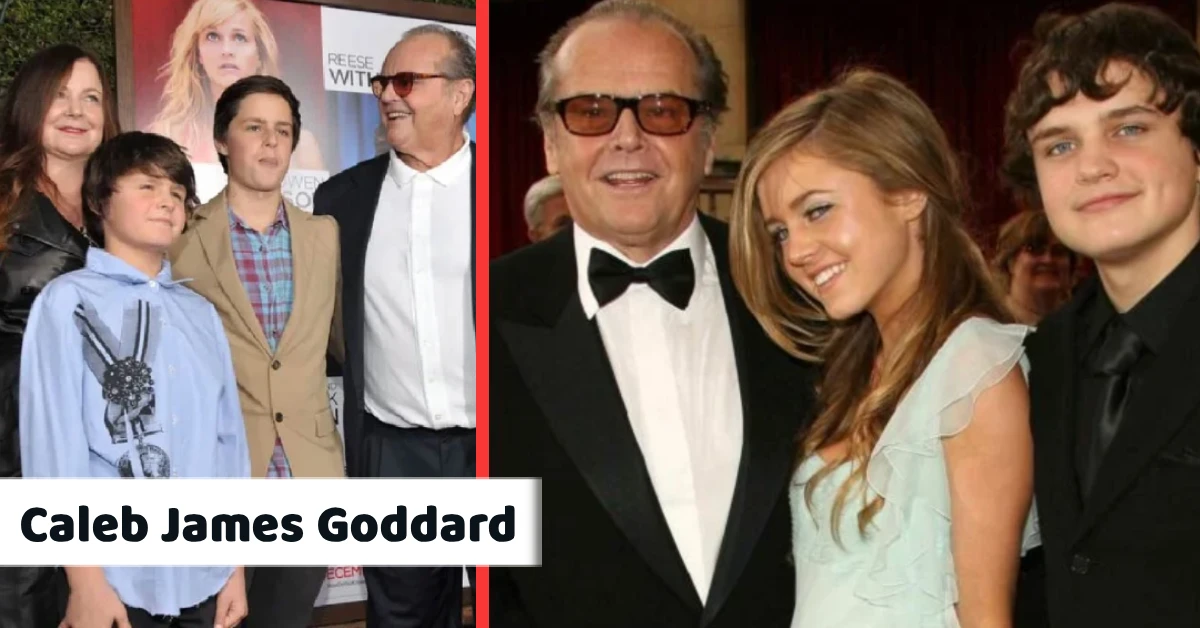
Caleb James Goddard, born in 1970, is Jack Nicholson’s son with actress Susan Anspach. After years of public paternity denial, Caleb forged his own path as a U.S. diplomat and journalist. He lives privately with his wife, Karine Pouget, and their two children, avoiding Hollywood’s spotlight.
Caleb James Goddard entered the world on September 26, 1970, in Los Angeles. His mother, Susan Anspach, had just finished filming “Five Easy Pieces” with Jack Nicholson. The two had a brief relationship during production. When Susan became pregnant, she maintained that Nicholson was the father.
Nicholson didn’t see it the same way. For years, he publicly denied paternity. In a 1984 Rolling Stone interview, he dismissed Susan Anspach’s claims outright, which influenced Caleb’s life.
That same year Caleb was born, Susan married Mark Goddard, the actor known for “Lost in Space.” Mark adopted Caleb and gave him the Goddard surname. This provided legal stability and a father figure during uncertain times. Even after Susan and Mark divorced in 1977, Caleb kept the name.
The circumstances created a split identity for Caleb. His birth certificate listed one reality: he is the son of Jack Nicholson. Public statements from Jack Nicholson suggested another. Susan Anspach never wavered in her version of events.
Susan Anspach raised Caleb primarily as a single mother. She worked steadily in film and theater throughout the 1970s and early 1980s, balancing career demands with parenting. Mark Goddard remained involved as a stepfather until the divorce, offering structure during Caleb’s early childhood.
The public denial from Nicholson created complications that went beyond legal matters. Caleb grew up knowing his biological father was one of Hollywood’s biggest stars—someone who appeared on magazine covers and television screens—yet refused to acknowledge him publicly.
Susan shielded Caleb from much of the media attention. She gave a few interviews about the paternity situation and kept her son out of tabloid coverage. Her approach emphasized normalcy over celebrity. She wanted Caleb to build his own identity, not one defined by his famous father’s rejection.
Mark Goddard’s presence offered something Jack Nicholson couldn’t or wouldn’t provide during those years: consistency. Even after the marriage ended, Mark remained a stabilizing influence. This gave Caleb a model of fatherhood that didn’t revolve around fame or public image.
Jack Nicholson’s relationship with Caleb began to shift during Caleb’s college years. Caleb attended Georgetown University in Washington, D.C., graduating in 1992. Nicholson quietly paid the tuition, marking his first significant financial support for Caleb’s life.
In 1995, Caleb spoke with People magazine about his father. He revealed that Nicholson had privately acknowledged him as his son. This admission came more than two decades after Caleb’s birth. The public acknowledgment took even longer.
By 1998, Nicholson told reporters that he and Caleb “got along beautifully now.” The statement confirmed what had happened in private: a relationship had formed after years of distance, impacting Caleb’s life. Whether this included regular contact or occasional meetings remains unclear. Both Caleb and Nicholson have kept the details of their relationship away from public view.
The timeline shows a gradual process. Nicholson moved from outright denial in the 1980s, to private support in the early 1990s, to qualified public acceptance by the late 1990s. For Caleb, this meant spending most of his formative years without his biological father’s acknowledgment.
Caleb’s education at Georgetown pointed toward a different path than Hollywood. He studied political science and international relations, graduating in 1992. His first career moves took him into broadcast journalism.
He worked at CNN, where he helped launch the Hong Kong Financial News Bureau. Later, he joined Bloomberg TV as head of programming for Bloomberg TV Asia. At Yahoo!, he hosted what was reportedly the first live news broadcast on the internet. These roles positioned him at the intersection of media, finance, and technology during the 1990s and early 2000s.
In 2012, Caleb made a significant career shift. He joined the U.S. State Department as a Foreign Service Officer. This placed him in the world of international diplomacy, far removed from entertainment industry circles.
His diplomatic work has taken him to multiple countries. He’s served at U.S. embassies in Guinea, Thailand, Pakistan, Brussels, and Mauritius. His portfolio has included hostage negotiations, election monitoring, Ebola response coordination, consular services, and prisoner rights advocacy. He earned a master’s degree from the London School of Economics in International Political Economy, adding academic credentials to his practical experience, much like the features of Caleb James Goddard’s education.
This career trajectory shows a clear intention. Caleb had the option to leverage his father’s fame for opportunities in Hollywood. Instead, he built expertise in fields where the Nicholson name carried no special weight. His success comes from his own skills, not inherited celebrity.
Caleb married Karine Pouget in December 1998. The couple has two children together. Details about their family life remain scarce because Caleb has maintained strict privacy boundaries.
He has no public social media accounts. He doesn’t give interviews. He doesn’t attend Hollywood events or red carpet premieres, unlike many in his family’s fame. In an era when celebrity children often build careers as influencers or use family connections to launch entertainment ventures, Caleb’s approach stands out.
This privacy isn’t accidental. It reflects values likely instilled by Susan Anspach, who protected him from media scrutiny during childhood. It also demonstrates that not everyone born into Hollywood wants the spotlight. Some prefer to build lives defined by their own choices rather than inherited fame.
When Susan Anspach died in 2018, Caleb asked that memorial donations go to Amnesty International. This request revealed something about the values she passed to him—a concern for human rights and social justice that aligns with his diplomatic work, much like Susan Anspach’s influence on Caleb.
The contrast with Jack Nicholson’s public persona couldn’t be sharper. While Nicholson embraced celebrity and became one of Hollywood’s most recognizable figures, Caleb actively avoided it. This wasn’t a rebellion. It was self-determination.
Jack Nicholson has five children with four different women. Caleb’s half-siblings include actress Lorraine Nicholson and actor Ray Nicholson, both children of actress Rebecca Broussard. Jennifer Nicholson, daughter of Sandra Knight, works as a fashion designer, showcasing her unique style away from her family’s fame. Honey Hollman, daughter of Danish model Winnie Hollman, has also stayed largely private.
In 2024, actress Tessa Gourin publicly identified herself as another of Nicholson’s unacknowledged children. Her story mirrors Caleb’s in some ways. She grew up knowing Nicholson was her father, but without public acknowledgment. Unlike Caleb, she chose to speak out about the experience, writing about the challenges of being a “secret” child of a famous parent.
The family structure reveals a pattern. Nicholson maintained closer relationships with some children than others. Lorraine and Ray grew up with regular contact with their father. Caleb and Tessa did not receive the same treatment, at least not initially.
Whether Caleb maintains relationships with his half-siblings isn’t publicly known. The different circumstances of their upbringings—some acknowledged, some not—likely created complex dynamics.
Caleb James Goddard’s life offers a counternarrative to typical Hollywood legacy stories. Most celebrity children face pressure to follow their parents into entertainment. Some succeed. Others struggle with comparisons to their famous parents.
Caleb solved this problem by opting out entirely. He built a career in diplomacy and journalism based on his own merits. He married and started a family away from public scrutiny. He maintained privacy in an age when privacy requires constant vigilance.
His story also highlights the lasting influence of Susan Anspach. Despite the challenges she faced—raising a child alone, dealing with public denials from Nicholson, balancing career and motherhood—she gave Caleb the tools to build an independent life. Her emphasis on education, personal values, and privacy shaped his adult choices.
The reconciliation with Jack Nicholson shows that some family relationships can heal over time. The process took decades. It happened mostly in private. But it happened. Whether the relationship remained close throughout Nicholson’s later years isn’t clear. What matters is that both men found a way past the public denial that marked Caleb’s early life.
For anyone navigating complicated family dynamics or trying to establish an identity separate from famous parents, Caleb’s path offers lessons. Privacy is possible, even for those born into fame. Career success doesn’t require leveraging family connections. And sometimes, the best way to honor a parent’s legacy is to build your own.