
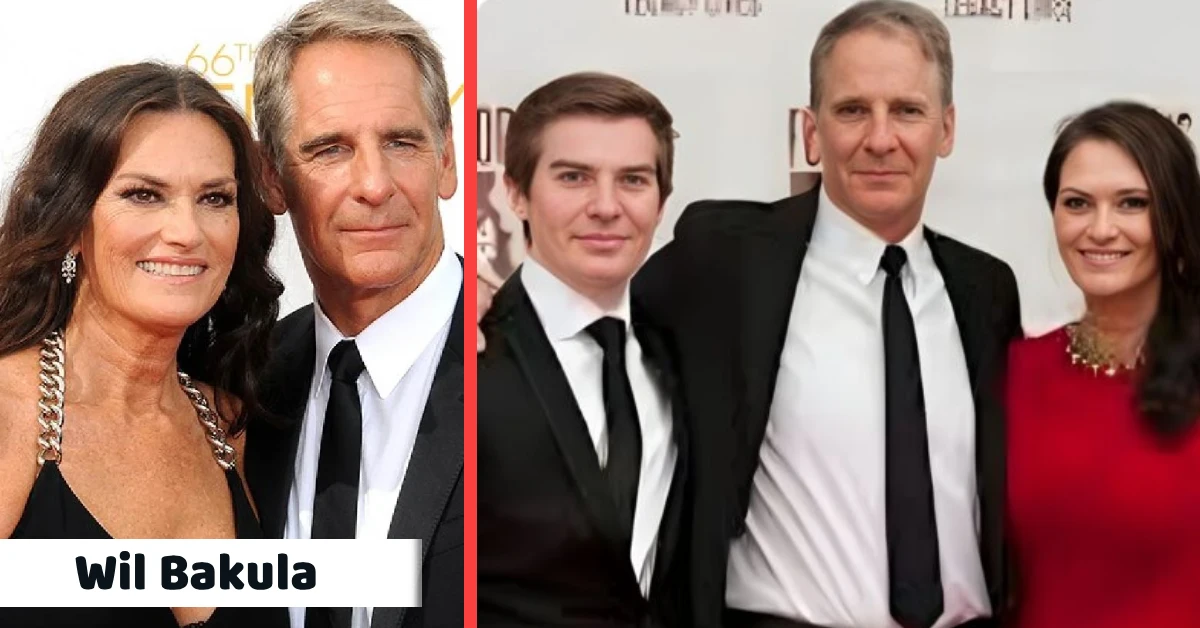
Wil Bakula, born in December 1995, is a Portland-based music producer and member of the indie pop duo Foamboy. The eldest son of actor Scott Bakula and actress Chelsea Field, he chose music over Hollywood, creating jazz-inspired pop through albums like My Sober Daydream and Eating Me Alive.
Who Is Wil Bakula?
Most people recognize the name Bakula because of Scott Bakula, the actor who time-traveled through history as Dr. Sam Beckett in Quantum Leap and later commanded the Enterprise as Captain Jonathan Archer in Star Trek: Enterprise. But his eldest son took a different route entirely.
Wil Bakula is a music producer and keyboardist working in Portland’s indie music scene. He co-founded Foamboy, a duo that blends jazz, pop, and R&B into something that feels both nostalgic and fresh. While his father spent decades in front of cameras, Wil chose to work behind mixing boards and synthesizers, building a career that stands apart from Hollywood’s glare.
He’s not hiding from his family name. He’s just not leading with it. For Wil, music came first—and that decision shaped everything that followed.
Early Life and Family Background
Wil was born in December 1995, the first child of Scott Bakula and Chelsea Field. Both parents were working actors when he arrived, which meant he grew up around sets, scripts, and the unpredictable rhythms of entertainment industry life. Despite that exposure, his childhood was remarkably grounded.
Scott Bakula has spoken openly about prioritizing family over career, especially after his first marriage ended during the demanding years of Quantum Leap. By the time Wil was born, Scott had made family time non-negotiable—even adding clauses to contracts ensuring he’d be home for dinner by 6 PM.
Chelsea Field, known for roles in films like The Last Boy Scout and Masters of the Universe, brought her own acting pedigree to the household. Together, they created an environment where creativity was encouraged, but fame wasn’t glorified.
Wil has three siblings. His younger brother Owen, born in 1999, became a dancer with Columbia City Ballet and advocates for gender non-conformity. His older sister, Chelsy, born in 1984 from Scott’s first marriage to Krista Neumann, appeared in an episode of Quantum Leap but largely stays out of the spotlight. His adopted brother Cody, born in 1991, pursued gemology and goldsmithing, keeping his life entirely private, unlike many celebrity children.
The Bakula household valued independence. Each child found their own path, and Wil’s led to music.
Education: From Loyola High School to Willamette University
Wil attended Loyola High School in Los Angeles, a Jesuit institution known for its academic rigor and arts programs. It was there that his interest in music took shape, though he kept his personal life largely private even then, unlike many celebrity children.
After graduating, he headed north to Willamette University in Salem, Oregon. The school’s music program gave him the structure and creative freedom to explore his sound. He studied music theory, performance, and composition, eventually completing a senior recital that showcased his skills as both a performer and producer.
One of his notable projects at Willamette was a research paper titled “Musicians of Portland and New Orleans: An Investigation into the Cultural Effects on Creative Processes.” The work examined how regional music scenes—specifically the improvisational jazz traditions of both cities—shaped the artists who emerged from them, highlighting the importance of upbringing in artistic development. That research wasn’t just academic. It informed how he thought about his own work and the Portland scene he’d soon join.
More importantly, Willamette introduced him to the collaborators who would define his career. It was there he met Katy Ohsiek, a vocalist and lyricist who would become his long-term creative partner.
The Chromatic Colors Years
Before Foamboy, there was Chromatic Colors—an experimental music collective Wil co-founded with Katy Ohsiek, Nick Burton, and Justin Kiavongcharoen during his time at Willamette. The group formed around 2016 and became a testing ground for ideas, styles, and sounds.
Chromatic Colors released two full-length albums and performed across Oregon, playing outdoor festivals, dive bars, and basement shows. The collective’s sound was intentionally loose, jumping between genres and moods as members rotated in and out. For Wil, it was a chance to learn by doing—producing tracks, performing live, and figuring out what worked and what didn’t.
One of their better-known projects was the music video for “Expectations,” which Wil co-directed with Isaac Turner. The video captured the group’s experimental ethos—part performance, part visual art, all youthful energy.
But as the members graduated and moved on, Chromatic Colors wound down. The pandemic of 2020 accelerated that shift. Rather than try to sustain the collective, Wil and Katy made a decision: they’d narrow their focus, streamline their sound, and create something tighter, reflecting their unique upbringing. That decision became Foamboy.
Foamboy: A New Chapter in Music
Foamboy officially formed in 2020, though Wil and Katy Ohsiek had been collaborating for years. The duo’s name doesn’t have a grand origin story—it was simply a phrase that stuck, evoking something soft, ephemeral, and unpretentious. That vibe carried over into the music.
Wil handles production, creating layered, synth-heavy instrumentals that feel warm and textured. Katy writes lyrics and melodies, often exploring themes of identity, relationships, and the disorienting experience of modern life. Together, they built a sound that draws from jazz, funk, and R&B while landing firmly in the indie pop space.
Their creative process is collaborative but distinct. Wil typically produces 30 to 40 musical fragments—chorus ideas, verse loops, synth progressions—and cycles through them daily until patterns emerge. He’s described it as assembling a puzzle, finding which pieces fit together to form a complete song. Katy then takes those instrumentals and adds vocal melodies and lyrics, often processing darker emotions through upbeat production.
That contrast—melancholic lyrics over danceable beats—became Foamboy’s signature.
My Sober Daydream (2021)
Foamboy’s debut album, My Sober Daydream, dropped on October 1, 2021, showcasing their individuality in a crowded music scene. It was an immediate breakout for the duo, earning airplay on KCRW, coverage from Consequence of Sound, and features on platforms like Week in Pop and Audiofemme.
The album is 10 tracks of synth-centric, jazz-inspired pop. Songs like “Better” confront depression with sarcastic simplicity, while tracks like “Logout” and “Alien” explore digital fatigue and fragmented identity. The production is lush but never overwhelming, giving Katy’s vocals space to breathe while Wil’s synth work adds depth and movement.
Critics compared the duo to artists like Thundercat, Men I Trust, and The Internet—high praise for a debut. The album positioned Foamboy as a fresh voice in the Pacific Northwest indie scene, and venues like Holocene, Mississippi Studios, and Doug Fir Lounge started booking them for live performances.
Eating Me Alive (2024)
Their second album, Eating Me Alive, arrived in 2024 with a darker, more introspective tone. The songs explore the rise and fall of a complicated relationship, the pressure of public art, and the process of discovering queer identity. Katy’s lyrics became more vulnerable, while Wil’s production leaned into moodier synth swells and complex percussion.
The album charted on KCRW and several college radio stations across the country. That summer, Foamboy toured the West Coast and played festivals including Pickathon, Timberfest, and Belltown Bloom. The live shows expanded the duo’s lineup to include additional musicians, allowing them to recreate the layered sound of the recordings while adding spontaneity to the performances.
The album cemented Foamboy’s reputation as a duo capable of growth, nuance, and emotional depth.
What’s Next: “Stupid Hot” (2026)
Foamboy is currently preparing their third album, Stupid Hot, scheduled for release in spring 2026. Early descriptions suggest a shift toward house-inspired dance tracks with moody synth textures and haunting vocal melodies. If the trajectory holds, it’ll be their most club-ready work yet—a natural progression from the introspective tone of Eating Me Alive, reminiscent of the sounds found in NCIS soundtracks.
The duo continues to refine their sound while staying grounded in the Portland music community. They’re not chasing mainstream success; instead, they embrace their individuality and the freedom it brings. They’re building something sustainable, authentic, and entirely their own.
His Role as Producer and Creative Process
Wil’s strength lies in production. He builds the instrumental backbone of Foamboy’s songs, layering synthesizers, drum machines, and samples into rich soundscapes that feel both analog and electronic. His approach is meticulous—he’ll create dozens of musical ideas before finding the combinations that work.
In interviews, he’s described his process as listening to demos obsessively until patterns reveal themselves. He doesn’t force songs into existence. He waits for them to emerge from the fragments. That patience shows in the final product—Foamboy’s songs feel cohesive, even when they shift tempo mid-track or juxtapose conflicting moods.
Justin Yu Kiatvongcharoen, who mixed My Sober Daydream and contributed drums to the live shows, helped Wil bridge the gap between electronic and acoustic percussion. That blend became central to Foamboy’s sound—grounded enough to feel organic, polished enough to work on playlists.
Wil doesn’t perform vocals, but his production serves as a second voice in the music. It guides the emotional arc of each song, supporting Katy’s lyrics without overpowering them.
Musical Style and Influences
Foamboy’s sound sits at the intersection of jazz, pop, and R&B. The music is danceable but never shallow, introspective but not inaccessible. Wil’s synth work draws from funk and disco traditions, while Katy’s vocal melodies nod to contemporary R&B artists like The Internet and SZA.
Critics have compared the duo to Thundercat for their jazzy basslines and experimental structures, and to Men I Trust for their dreamy, lo-fi production. Those comparisons are fair, but Foamboy has its own identity—a Pacific Northwest sensibility that values texture, space, and emotional honesty.
The contrast between upbeat instrumentals and melancholic lyrics is deliberate. Wil has said that the best pop music makes you feel multiple emotions at once—joy and sadness, nostalgia and hope. Foamboy’s songs aim for that complexity.
Privacy and Life Outside the Spotlight
Unlike many children of famous actors, Wil Bakula keeps a low public profile. He doesn’t maintain an active social media presence, rarely gives interviews, and avoids red carpet events. That choice is deliberate. He’s building a career based on his work, not his last name.
Growing up as Scott Bakula’s son could have opened doors in Hollywood. Wil walked through different ones. He moved to Oregon, embedded himself in a local music scene, and spent years collaborating with other artists before releasing a debut album. That path required patience, but it also gave him credibility.
Fans of Foamboy often don’t realize who Wil’s father is until they look him up. That’s by design. The music stands on its own, and so does he.
Wil Bakula’s Siblings: The Bakula Family
Wil’s siblings each found their own paths, far from Hollywood’s expectations, which were shaped by their father’s influence as an American actor.
Owen Bakula, born in 1999, is a dancer who has performed with Columbia City Ballet in productions like Dracula: Ballet With A Bite. He’s also an advocate for gender non-conformity, using his platform to explore identity through performance art, modeling, and social media.
Chelsy Bakula, born in 1984, made a brief appearance in Quantum Leap as a child but largely stayed out of acting. She maintains a private life and rarely appears in public.
Cody Bakula, adopted in 1991, pursued gemology and goldsmithing. He’s the most private of the siblings, keeping his personal and professional life entirely out of the spotlight.
Together, the Bakula siblings represent a family that values independence, creativity, and privacy over public recognition.
Net Worth and Financial Independence
Wil Bakula’s personal net worth isn’t publicly available, and given his private nature, it’s unlikely to be disclosed. What’s clear is that he earns income through his music—album sales, streaming royalties, live performances, and production work.
His father, Scott Bakula, has an estimated net worth between $16 million and $18 million, accumulated through decades of acting in television and film, with Bakula’s net worth being a topic of interest. That financial cushion likely provided Wil with stability as he built his music career, but it didn’t define his path.
Wil chose music not because he needed the money, but because it’s what he wanted to do. That distinction matters, especially in a family where individuality is celebrated. He’s not leveraging his family name for opportunities. He’s earning them through the quality of his work.
Wil Bakula isn’t trying to escape his father’s shadow. He’s simply not standing in it. He’s in Portland, making music that matters to him, collaborating with artists he respects, and building a career on his own terms. That’s the story worth telling.